On this page
Chewed door frames and complaints from neighbours get labelled separation anxiety almost automatically. Sometimes that is right. Often the dog is bored, or under-exercised, or reacting to something outside that has nothing to do with being alone.
The distinction matters because the treatments are different, and the enrichment advice that fixes a bored dog does nothing for a panicking one.
Key figures
- about 5% Finnish survey: dogs with high separation-related traits
- 32% Finnish survey: dogs with high noise sensitivity
How common it actually is
A study of 13,715 pet dogs across 264 breeds, published in Scientific Reports in 2020, measured how often owners reported each anxiety-related trait:
- Noise sensitivity32%
- General fearfulness29%
- Fear of surfaces and heights23.5%
- Aggression14%
- Separation-related behaviourabout 5%
Salonen et al., Scientific Reports, 2020, owner-reported survey of Finnish pet dogs. Percentages are of dogs showing the trait at a level the study classified as high.
Other studies using different methods have reported higher separation figures, so treat the exact number as a range rather than a fact. The useful point stands: separation-related behaviour is less common than the noise sensitivity it is often confused with, and a dog that panics during a distant thunderstorm while you are out is not necessarily anxious about you leaving.
Telling them apart
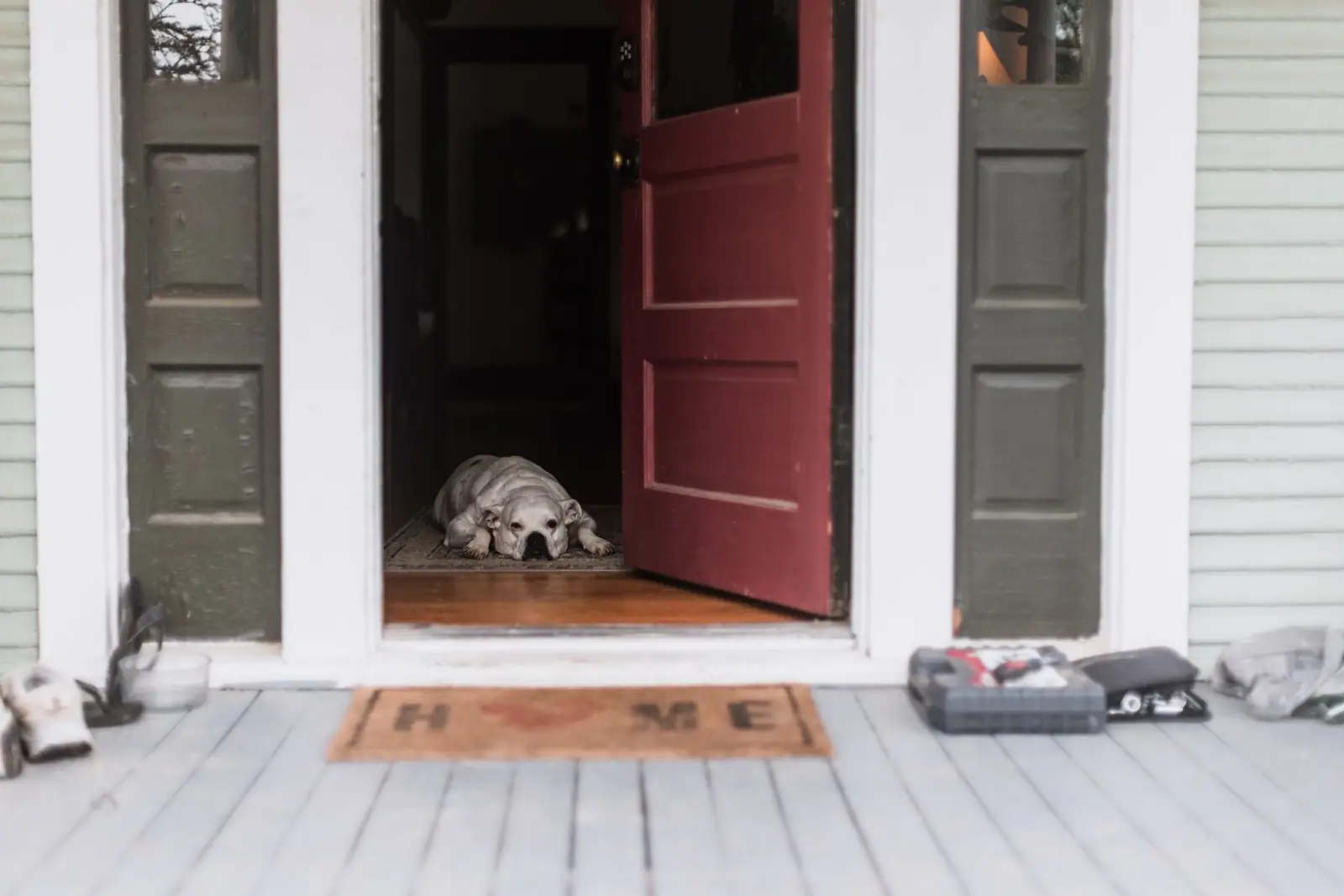
Film the dog. A phone propped on a shelf for the first 45 minutes after you leave answers most of the question.
Looks like genuine separation distress:
- Panic starts within minutes of you leaving, often while you are still preparing.
- Pacing, drooling, panting, whining or howling continuously.
- Damage concentrated at exits: doors, door frames, window sills.
- Toileting indoors in an otherwise housetrained dog.
- Refusing food that was left down.
Looks like boredom or something else:
- The dog settles, then becomes active an hour or two later.
- Damage is scattered and focused on interesting objects.
- Eats the stuffed food toy happily.
- Reacts to specific events outside, deliveries, other dogs, a storm.
What helps, in order
- Rule out medical causes. Pain, gastrointestinal problems and cognitive decline in older dogs all show up as changed behaviour when alone.
- Meet the basic needs first. A dog with too little exercise and nothing to do will find something to do. This fixes boredom and only boredom.
- Work below the threshold of panic. Departures so short the dog stays calm, built up gradually. Progress is measured in the dog staying relaxed, not in the clock.
- Break the departure cues. Pick up your keys and sit down again, put your coat on and make tea, until the cues stop predicting absence.
- Get qualified help early. Genuine separation distress is slow work and easy to make worse. Look for a veterinary behaviourist or a certified behaviour consultant.
- Ask about medication if the dog is panicking. Your vet can prescribe medicines that make behaviour work possible for a dog too distressed to learn. It is not a shortcut and not a failure.
Punishment after the fact. The dog cannot connect your reaction to something it did an hour ago, and the result is a dog that is also anxious about you coming home. Getting a second dog for company also rarely solves it: the attachment is usually to people.
The expectation to set
Separation distress is usually managed over months, not days, and the realistic goal is a dog that copes with normal absences calmly. During the work, most programmes ask you to avoid leaving the dog alone beyond its current tolerance, which is inconvenient and is also the part that makes progress possible.
The trainer selection guide distinguishes service credentials and methods. The daycare comparison examines a care arrangement without presenting attendance as treatment for distress.
Questions people ask
How do I know if my dog has separation anxiety?
Film the first hour alone. Distress starts almost immediately, is continuous, and involves panting, pacing, vocalising, damage at exits and refusing food. Boredom looks different.
How common is separation anxiety in dogs?
A 13,715-dog study reported separation-related behaviour in about 5 percent, among the least common anxiety traits it measured. Other studies using different methods report higher figures.
Will another dog fix it?
Usually not. If the attachment is to people, a second dog does not substitute, and you may end up with two dogs that struggle instead of one.
Does medication help separation anxiety?
For genuinely distressed dogs it can make the behaviour work possible by lowering panic enough for the dog to learn. It is prescribed by a vet and used alongside training, not instead of it.
Where these figures come from
- Prevalence, comorbidity, and breed differences in canine anxiety in 13,700 Finnish pet dogs Scientific Reports · pmc.ncbi.nlm.nih.gov
- Position Statement on Humane Dog Training American Veterinary Society of Animal Behavior · avsab.org
Figures last checked September 2026.