On this page
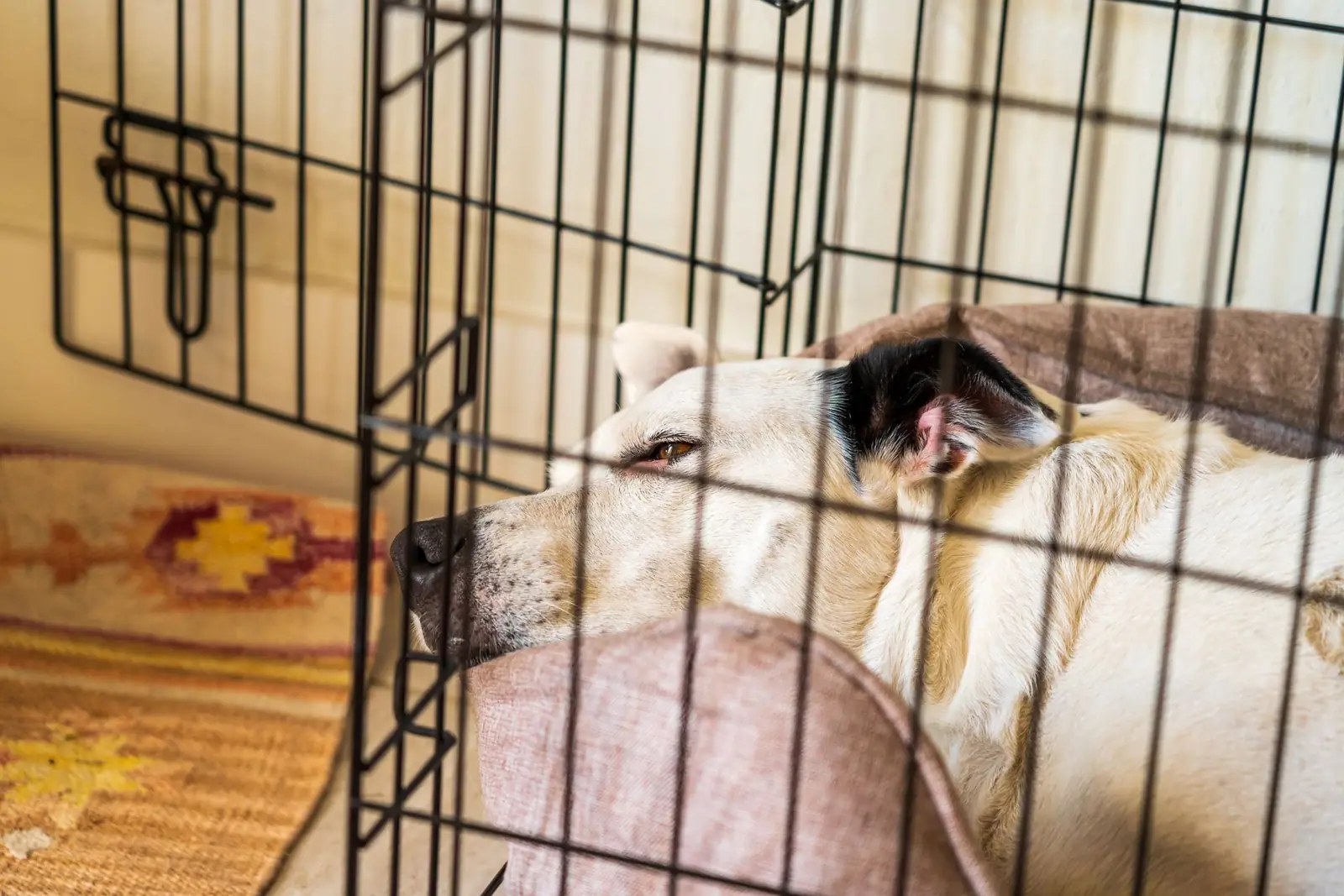
Crates divide people, usually because they have seen both versions: the dog that takes itself to bed with the door open, and the dog that panics when the latch clicks. Both come from the same equipment. The difference is the introduction.
What a crate is actually for
Three honest uses:
- Housetraining. Dogs avoid soiling their sleeping area, so a correctly sized crate gives a puppy a reason to hold on until the next trip outside.
- Safety. A puppy that cannot be watched is a puppy chewing cables. A crate is the version of supervision that lets you have a shower.
- Recovery and travel. A dog that already finds a crate normal copes far better with crate rest after surgery, a flight, or a night in a hotel.
What it is not for is storage. A dog crated all day is not being trained, it is being contained.
Sizing it correctly
The dog should be able to stand without ducking, turn around comfortably, and lie fully stretched out. Bigger than that and a puppy will simply use one end as a toilet and sleep in the other, which defeats the housetraining purpose.
Buy the crate for the adult dog and use the divider panel to shrink it while the puppy grows. One purchase instead of three.
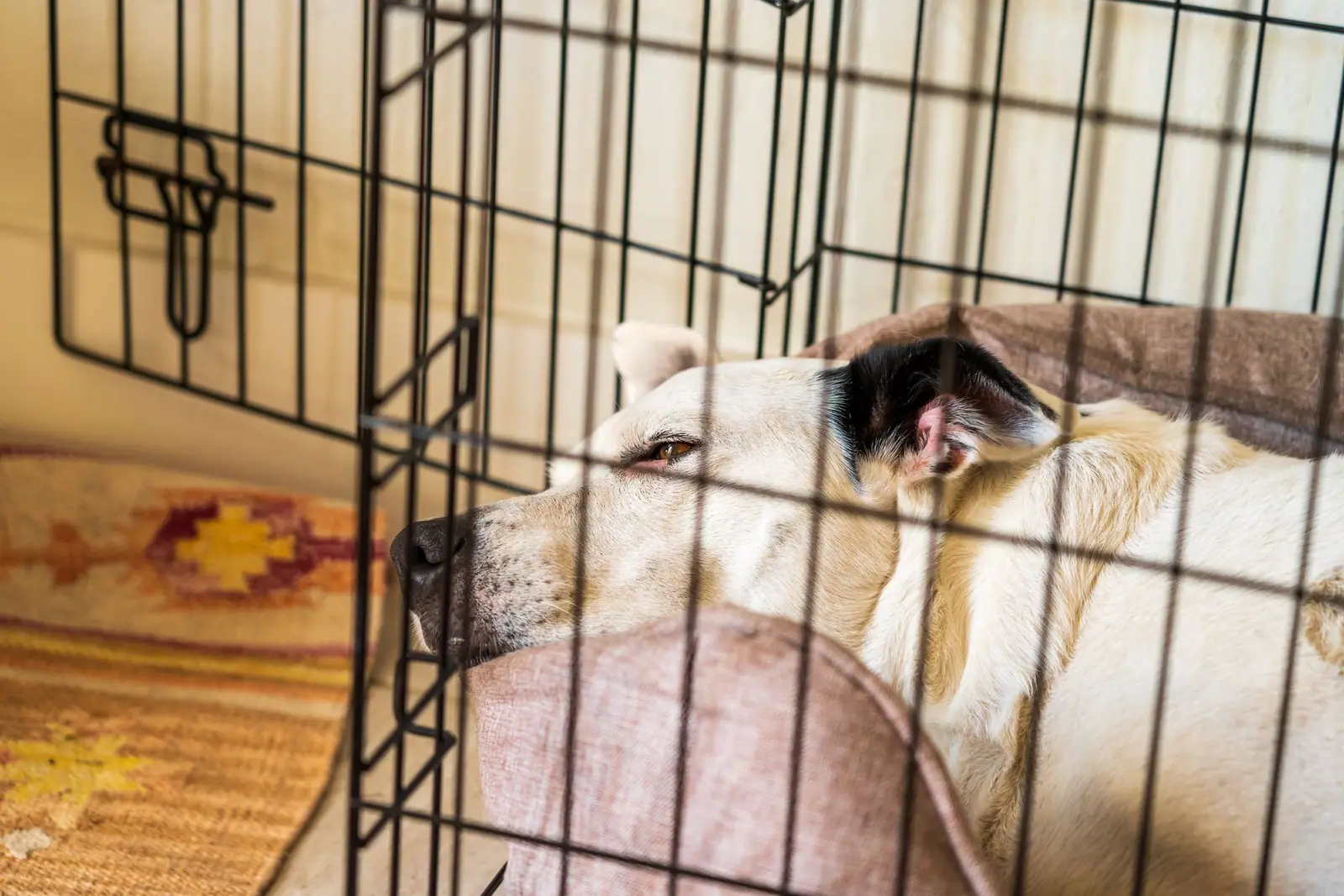
The introduction, in order
- Door open, food inside. Nothing else happens. Meals go in the crate. The dog comes and goes freely for a few days.
- Chew time inside. A stuffed food toy the dog only gets in the crate makes the crate the best room in the house.
- Close the door for seconds, while the dog is eating, then open it before it finishes. Build up in small steps.
- You stay in the room, then move around the room, then step out for a moment, then longer.
- Only then, short real absences. Keep them well inside what the dog is comfortable with.
Progress is judged by the dog staying relaxed. If it whines or scratches, the last step was too big; go back, not forward.
A puppy should not be crated longer than its age in months plus one, in hours. A puppy forced to soil its crate loses the instinct the whole method depends on, and you have made housetraining harder, not easier.
Signs it is going wrong
- Drooling, frantic scratching, bent bars or injured paws and teeth.
- Soiling in the crate in a dog that is otherwise clean.
- Panting and pacing before you even close the door.
These are distress, not protest, and pushing through them makes it worse. A dog showing them may have separation distress rather than a crate problem, and that needs a different approach and usually professional help. Some dogs never take to a crate; a dog-proofed room with a baby gate achieves most of the same things.
The puppy house-training guide connects confinement with the toilet routine. The separation anxiety guide covers distress that a crate alone does not resolve.
Questions people ask
How long can a dog stay in a crate?
For puppies, age in months plus one, in hours, is the working limit. Adult dogs should not be crated for long stretches routinely; a crate is a tool for specific times, not a place to live.
Should I cover the crate?
Many dogs settle better with a cover over part of it, which makes it den-like and blocks visual triggers. Leave ventilation and let the dog choose by leaving one side open.
My dog cries in the crate at night. What should I do?
For a young puppy, the crate beside your bed for the first weeks usually solves it, and a crying puppy may genuinely need to go out. Constant distress needs a step back in training.
Is crate training cruel?
Done correctly it gives a dog a safe place it chooses. Done as confinement for long hours, or as punishment, it is neither training nor kind.
Where these figures come from
- Puppy Potty Training Timeline American Kennel Club · akc.org
- Position Statement on Humane Dog Training American Veterinary Society of Animal Behavior · avsab.org
Figures last checked September 2026.