On this page
Replacing an aquarium heater means buying a device that can hold the fish’s required temperature under the room’s coldest conditions. A low purchase price is attractive only after power, physical fit, minimum water level and the temperature controls match the aquarium. Buying the cheapest version in a product family can leave a tank underheated.
Published prices below were checked in October 2026. They identify models and stock status rather than inventing a national replacement range. Labor, shipping, taxes and a separate thermometer can make the checkout or service bill larger than the heater’s displayed price.
Key figures
- $18.03 Hygger HG253 50 W heater
- $23.99 Hygger HG253 100 W heater, unavailable when checked
- $32.99 Hygger HG253 500 W heater
Current model prices run from $18.03 to $32.99
Hygger’s HG253 product page publishes these size variants and prices. Its current catalog marks the three middle versions unavailable. A listed price on an unavailable variant is a comparison point, not a promise of delivery before an existing heater fails.
| HG253 version | Maker’s tank-size range | Published price | Stock when checked |
|---|---|---|---|
| 50 W | 5–10 gallons | $18.03 | Available |
| 100 W | 10–20 gallons | $23.99 | Unavailable |
| 200 W | 20–40 gallons | $26.99 | Unavailable |
| 300 W | 40–60 gallons | $29.99 | Unavailable |
| 500 W | 55–100 gallons | $32.99 | Available |
Source note: Hygger HG253 product page and its current public variant data, checked October 2026. Prices precede any additional checkout charges; promotions and availability can change.
- 50 W, available$18.03
- 100 W, unavailable$23.99
- 200 W, unavailable$26.99
- 300 W, unavailable$29.99
- 500 W, available$32.99
Source note: Hygger HG253 product page and its current public variant data, checked October 2026. Prices precede any additional checkout charges; promotions and availability can change.
The endpoint difference is $14.96, but that is not a $14.96 saving available to every buyer. A model for a small tank and one for a much larger aquarium provide different heating capacity. Select the capacity first and compare products that meet that requirement.
Consider a hypothetical checkout with the $18.03 heater, an assumed $12 thermometer, $8 delivery and $3 tax. The cash total becomes $41.03. Only the heater price is published; the other three amounts illustrate charges to verify. An already-owned working thermometer should not be purchased again merely to reproduce this worksheet.
Room temperature and species narrow the choice
Aqueon lists its preset 50 W heater for aquariums up to 20 gallons, calibrated to 78°F with a stated plus-or-minus 1°F tolerance. Hygger rates its 50 W HG253 for 5–10 gallons. Those differing labels show why a single watts-per-gallon rule cannot replace each product’s instructions.
The desired temperature rise matters. Holding water at a hypothetical 78°F in a 73°F room requires a five-degree rise; the same target in a 63°F room requires 15 degrees. These are comparison inputs, not temperature advice for every species. Ask for the model’s capacity under the temperature difference the aquarium will experience.
An adjustable heater can suit a different target from a preset unit, but a wide dial range does not prove accuracy throughout that range. Check the thermometer against the operating target and watch for a persistent difference between the controller display and tank water.
The aquarium electricity guide explains why a more powerful heater can run for fewer hours. Do not lower a species’ required temperature simply to reduce runtime. Keep temperature selection and the energy calculation as separate decisions.
Physical fit includes the water level during maintenance
Measure the tank depth, the available mounting space and the lowest water level during a change. A heater that fits when the tank is full may become exposed before the water-change routine finishes. Follow its minimum submersion line and the maker’s permitted mounting orientation.
The cord must reach the outlet without strained connections, and the control must remain accessible without putting plugs where they can get wet. Aqueon’s glass-tank instructions specify drip loops for aquarium appliance cords. A longer cord does not remove the need for a safe electrical arrangement.
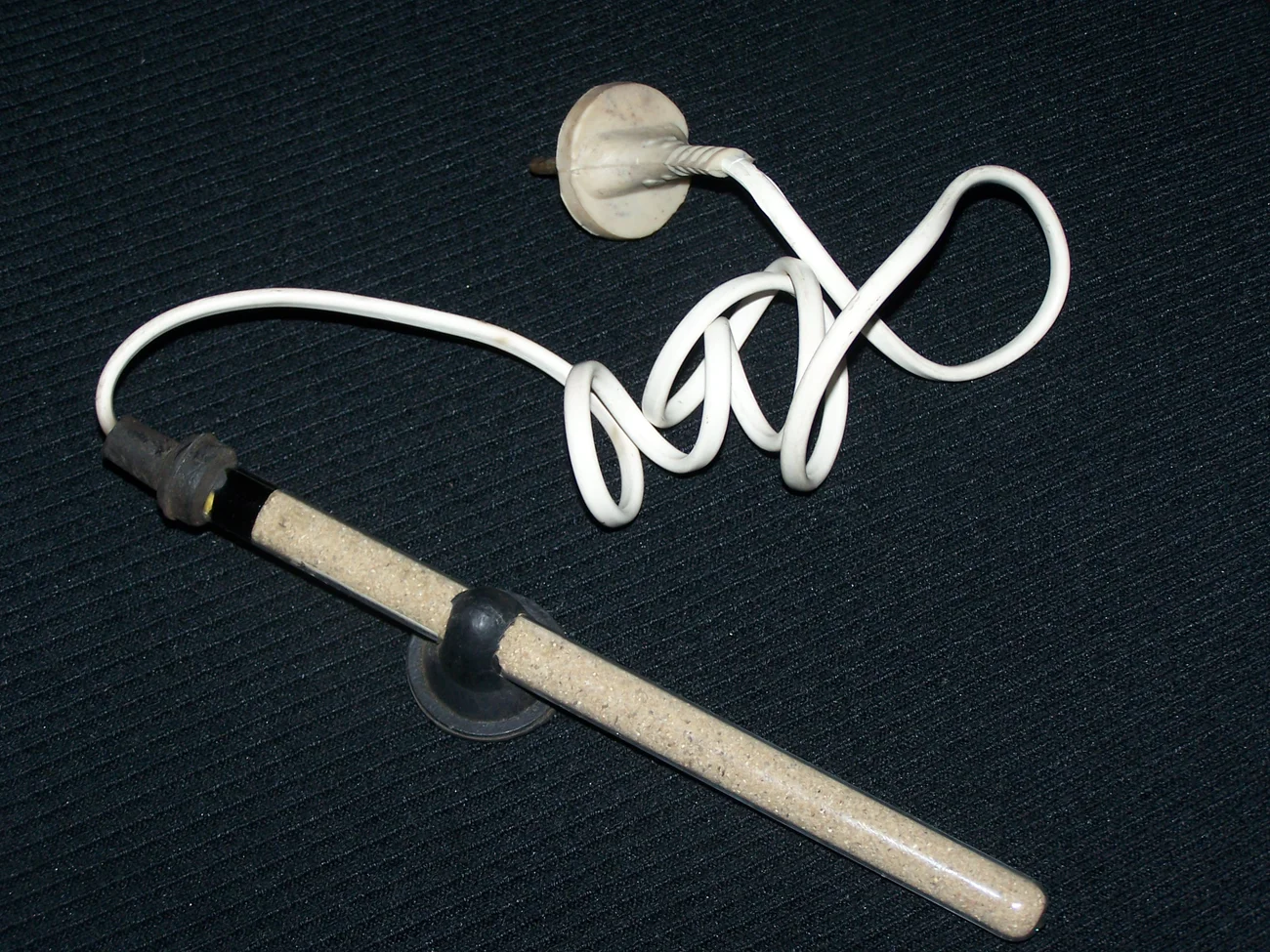
When comparing two models, include suction cups, guards or mounting parts required by their instructions. An optional controller is an additional purchase rather than a built-in feature unless the product description says it is included. Verify whether replacement mounting parts are available before treating the whole heater as disposable.
Replacement is governed by the model’s cooling instructions
Aqueon’s cold-weather heater guidance says to unplug its heater and let it cool for at least 30 minutes before removal. Its Pro adjustable-heater manual also calls for at least 30 minutes submerged before powering the appliance. Those numbers belong to that manufacturer’s instructions; use the manual for the model being installed rather than applying one waiting period to every brand.
Inspect the cord, glass and fittings before installation. A cracked body or damaged cord calls for removal from service according to the maker’s safety procedure, not a tape repair near water. Do not touch wet plugs or sockets; obtain help with the electrical supply if water has reached a connection.
Follow the heater’s electrical and submersion instructions, and confirm the fish’s temperature requirements with a knowledgeable aquatic-care professional. If equipment has failed and the tank temperature is changing, arranging safe replacement promptly matters more than waiting for a small online discount.
The water-change equipment guide covers the maintenance arrangement that can expose heaters. Record a working heater’s model and manual before a failure so replacement does not begin with a guess about its rating.
Purchase price and electricity have different time scales
For a worksheet, assume a 100 W heater draws full power for 25% of every hour in a 30-day month. Its consumption is 18 kWh. With an assumed rate of $0.20/kWh, that costs $3.60. At 50% operation, it would cost $7.20 for the same month. Neither percentage is a forecast for a particular tank.
The thermostat, room conditions and heat loss determine the real operating fraction. A manufacturer claiming an energy-saving mode has not, by that label alone, proved annual savings against the working heater already owned. Compare measured energy under similar conditions before attaching a payback period to a replacement premium.
Warranty length is also separate from useful life. Aqueon’s preset heater page lists a one-year warranty, while Hygger advertises an extended two-year warranty for electrical products on its current store page. Read the purchase conditions and exclusions; neither period means the heater will fail on the anniversary or that livestock losses are reimbursed.
Keep the receipt, serial or model information and temperature observations. Budget the purchase once, electricity as it is consumed, and replacements when condition or performance calls for them. A yearly automatic heater purchase would inflate the aquarium care budget without a documented replacement interval.
Questions people ask
How much is an aquarium heater replacement?
The HG253 examples checked here run from $18.03 for 50 W to $32.99 for 500 W before added charges. They serve different tank sizes, so compare fit and availability before choosing by price.
Is 50 W enough for a 20-gallon aquarium?
It depends on the heater and temperature rise. Aqueon lists its preset 50 W unit up to 20 gallons, while Hygger's HG253 50 W rating is 5–10 gallons. Follow the model's capacity guidance under the room conditions.
Does a 78°F preset suit every aquarium?
No. It is one product's fixed target. The species and care plan determine the required temperature; a preset unit cannot be adjusted to every different target.
Should heaters be replaced every year?
The prices and warranty periods here do not establish an annual replacement rule. Inspect condition, check temperature performance and follow the manufacturer rather than treating warranty expiration as a failure date.
Where these figures come from
- HG253 Precise Aquarium Heater: Variants and Prices Hygger · hygger-online.com
- Preset Heaters: 50 W, Target and Warranty Aqueon · aqueon.com
- Fish Tank Heater Tips for Cold Weather Aqueon · aqueon.com
- Pro Adjustable Heater Instructions Aqueon · aqueon.com
- Standard Glass Aquariums: Electrical Safety Aqueon · aqueon.com
Figures last checked October 2026.