On this page
An aquarium’s power bill comes from watts multiplied by operating hours, then priced using the electricity tariff. A label saying 100 W describes power while the device draws that load. It does not mean a thermostatic heater consumes 100 W continuously through every warm afternoon and cool night.
The example below uses documented equipment ratings with stated assumptions for runtime and price. It gives a calculation you can repeat with your own setup. A freshwater aquarium, a reef with additional pumps and a tank requiring active cooling can have very different totals; the number of gallons alone cannot price the bill.
Key figures
- $1.44 Example: monthly filter electricity cost
- $3.60 Example: monthly heater cost at 25% runtime
- $6.10 Example: monthly filter, light and heater electricity
Three loads produce a $6.10 monthly example
Fluval’s 07-series manual lists the 107 canister filter at 10 W for the U.S. electrical supply. Hygger lists its HG978 light for 24–30-inch tanks at 22 W. Its HG253 heater includes a 100 W model. These are examples of real ratings, not a recommendation to combine those models for any particular fish collection.
| Load | Runtime assumption | Energy in 30 days | Cost at assumed $0.20/kWh |
|---|---|---|---|
| 10 W filter | 24 hours each day | 7.2 kWh | $1.44 |
| 22 W light | 8 hours each day | 5.28 kWh | $1.06 |
| 100 W heater | Heating 25% of all hours | 18 kWh | $3.60 |
| Combined equipment | Above assumptions | 30.48 kWh | $6.10 |
Source note: equipment wattages are from Fluval’s 07 manual and Hygger’s HG978 and HG253 product pages. Hours, heater cycling and the 20-cent tariff are worksheet assumptions. Totals are calculated before rounding individual costs.
- 10 W filter$1.44
- 22 W light$1.06
- 100 W heater$3.60
Source note: equipment wattages are from Fluval's 07 manual and Hygger's HG978 and HG253 product pages. Hours, heater cycling and the 20-cent tariff are worksheet assumptions. Totals are calculated before rounding individual costs.
The formula is watts divided by 1,000, multiplied by hours, multiplied by price per kilowatt-hour. For the filter, 10 divided by 1,000 times 24 times 30 produces 7.2 kWh. Keeping the energy result visible makes it possible to change the tariff without rebuilding the equipment list.
Do not interpret the table as a complete household electricity bill. Standing charges, unrelated appliances and taxes may remain even if aquarium consumption changes. The aquarium care budget places this energy line beside food, testing and maintenance.
Heater cycling changes the result more than a small lamp
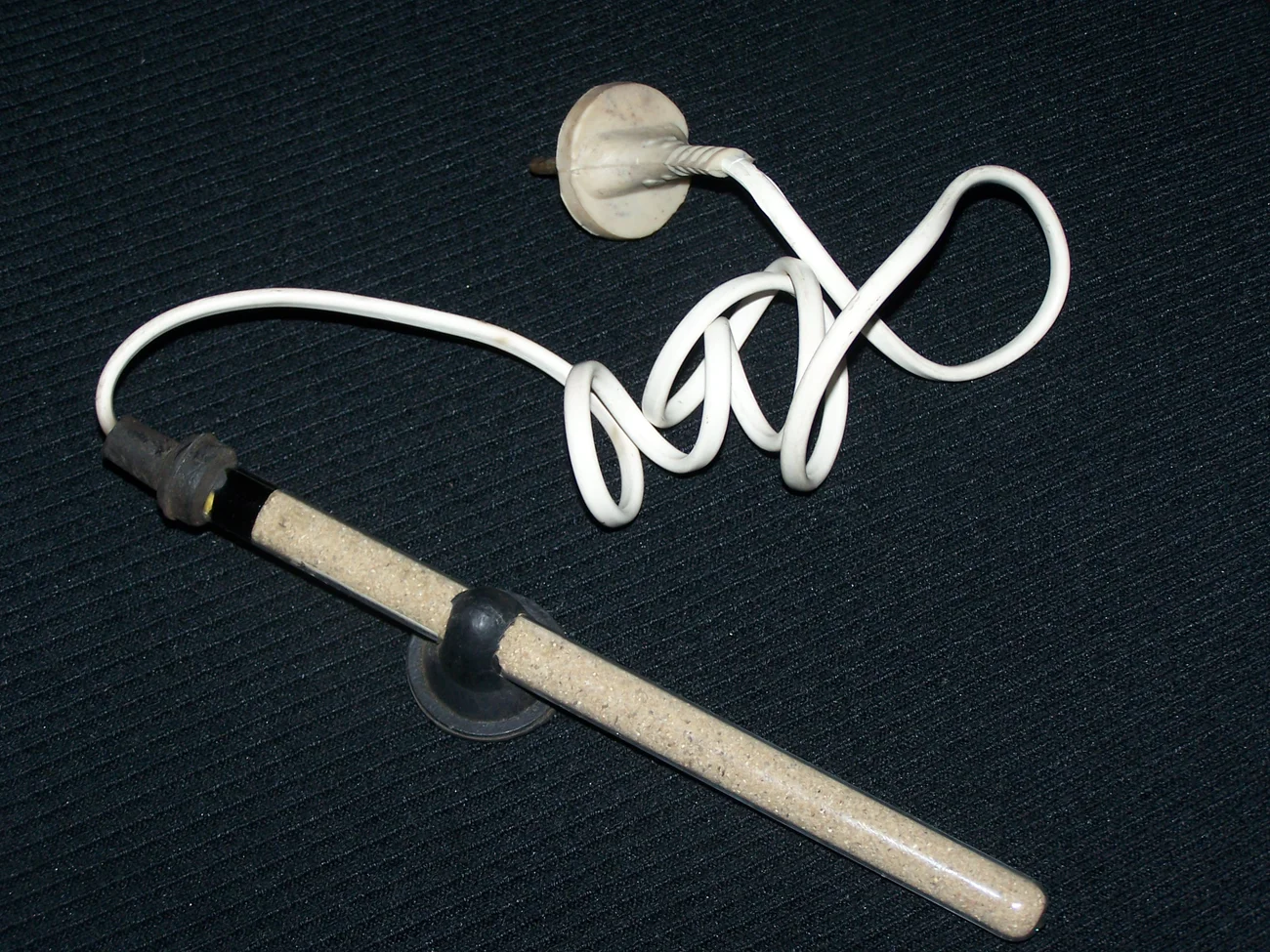
For a 100 W heater, continuous full-power operation over 30 days would use 72 kWh and cost $14.40 at the assumed tariff. A 25% duty cycle produces one-quarter of that consumption. At 50%, heater consumption becomes 36 kWh and costs $7.20; the three-device total becomes 48.48 kWh and $9.70.
That $3.60 difference between the two cycling examples is not a seasonal forecast. Room temperature, tank temperature, water movement, surface exposure and the heater’s control behavior affect runtime. A cold-room observation cannot silently become the budget for a warm-room summer.
An indicator light shows a state at the moment you look. Several quick checks do not prove the operating percentage over a whole day. A compatible plug-in energy monitor that records kilowatt-hours over several days can provide a firmer basis, provided its ratings and instructions permit the setup around aquarium equipment.
If a larger heater runs for less time to deliver the same heat, its higher nameplate wattage alone does not prove a higher bill. For example, the same 18 kWh results from a hypothetical 200 W load operating 12.5% of the month. That arithmetic does not establish that either heater can safely maintain this aquarium; sizing remains a separate decision in the heater replacement guide.
The utility tariff can double the same equipment cost
At 10 cents per kWh, the 30.48 kWh example costs $3.05. At 30 cents, it costs $9.14; at 40 cents, $12.19. No equipment or feeding change is involved. The same consumption is simply being priced differently.
EIA’s July 2026 U.S. residential average was 18.31 cents per kWh, reported in September 2026. That national benchmark would price 30.48 kWh at $5.58. It is an average of revenue and sales, not proof that your next kilowatt-hour costs that amount.
Use the consumption-dependent charges on the household tariff. If there are time-of-use rates, separate consumption by the rate periods rather than applying an unusually cheap overnight price to all hours. Filtration and other essential support must follow the tank’s operating requirements even when electricity becomes expensive.
A weekly reading is more informative than a maximum rating
Record which devices are included in a measurement. A power strip serving the entire aquarium can also include a nearby lamp or charger; those extras would overstate the tank’s consumption. Conversely, measuring only the heater leaves pumps and lighting out.
Here is a separate measurement example: suppose a suitable monitor records 8.4 kWh across seven days for the aquarium equipment. The observed daily average is 1.2 kWh. Extending that average to 30 days gives 36 kWh and $7.20 at the hypothetical 20-cent rate. Label it an extrapolation from that week, with dates and room conditions recorded.
Do not open electrical devices or improvise a connection to obtain a reading. Follow aquarium and monitor instructions, keep connections dry and maintain the documented drip-loop arrangement. A damaged cord or unsafe outlet calls for repair of the electrical setup before measurement continues.
Do not switch off filtration or let the tank leave its species’ temperature range to reach a cheaper electricity number. Compare equipment that still provides the required care, and seek qualified help with unsafe electrical connections.
A lighting upgrade rarely pays for itself quickly on watts alone
Suppose a replacement reduces lighting power from a hypothetical 40 W to 22 W while providing the required illumination. At eight hours daily, the reduction is 52.56 kWh over 365 days. At the assumed 20-cent price it saves $10.51 annually.
If the replacement costs an extra hypothetical $80, dividing that premium by the unrounded annual saving gives about 7.6 years. That is a simple energy payback, excluding failures, financing and other benefits. A timer, better plant lighting or a failed old fixture may justify the purchase independently of the power saving.
The lighting upgrade comparison covers purchase prices and fit. Review the power worksheet when equipment, room conditions or rates change. Retaining both kilowatt-hours and dollars helps distinguish an efficiency improvement from a change in the utility price.
For a species example, the betta care guide connects temperature and equipment with the fish being kept. Do not use the heater-runtime example as a substitute for that care requirement.
Questions people ask
Does a 100 W heater use 100 W all day?
Only while drawing that full load. A thermostatic heater cycles, so 30-day use can be below the 72 kWh continuous-operation calculation. Measure consumption or label the operating percentage as an assumption.
How much does a 10 W filter cost to run?
At 24 hours daily it uses 7.2 kWh in 30 days. With an assumed $0.20/kWh tariff, that is $1.44. Replace the assumed rate with your own consumption charges.
Can I use the national electricity average?
It supplies context, but the household tariff is the better budgeting input. EIA reported 18.31 cents per kWh nationally for July 2026; your price and time-of-use periods may differ.
Is a bigger heater always more expensive?
No. Watts must be multiplied by operating time. Two different ratings can deliver the same energy total, but neither arithmetic nor tank volume alone establishes that a heater is suitable.
Where these figures come from
- 07 Series Filter Manual: U.S. Wattage Specifications Fluval · fluvalaquatics.com
- HG978 LED Fish Tank Lights Hygger · hygger-online.com
- HG253 Precise Aquarium Heater Hygger · hygger-online.com
- Electric Power Monthly: Table 5.6.A U.S. Energy Information Administration · eia.gov
- Standard Glass Aquarium: Drip Loops and Support Aqueon · aqueon.com
Figures last checked October 2026.