On this page
An adult dog’s budget is shaped by the dog’s diet and care, the services the household purchases and the costs it would have to fund unexpectedly. Food is an obvious recurring line, but walking, boarding, grooming and insurance can create a much larger difference between two households.
This guide combines dated national context with local published service examples checked in October 2026. The annual worksheet is hypothetical and does not prescribe medical care, a diet or an insurance policy. Replace its assumptions with the dog’s care plan and the quotes the household receives.
Key figures
- $1,391 ASPCA 2021 yearly dog-care budget
- $2,420 Example: complete yearly household dog budget
- $245 Example: seven boarding nights at the nightly rate
The old ASPCA benchmark needs its date attached
ASPCA labels its cost table a 2021 update and publishes a $1,391 annual dog total. Within that table, food is $300 annually, routine medical care $225, preventive medication $185 and health insurance $516. Those figures help identify categories; they do not establish current premiums or the price of care for a particular dog.
The table also lists kennel or boarding at $25 per day. A daily rate is not the price of a year of travel, and it should not be used without a night count. Rebuild the annual worksheet from its categories rather than copying the total and adding an entire new travel budget on top of it.
For perspective only, $300 historical annual food spending is $25 per month, and $516 annual insurance is $43 per month. Inflation, location, coverage and the dog’s size or health can change the household’s quotes. Dividing an old annual figure by twelve does not make it a current monthly price.
The first-year dog cost guide covers a different stage. An adult-dog budget should not automatically repeat an initial crate, microchip or adoption purchase every year if the household already owns or completed those items.
A monthly allowance should fund a full year’s plan
The following worksheet uses assumed allowances except for the stated local boarding and grooming rate inputs. It illustrates how recurring food and periodic services fit together. The named $80 grooming price is Hamilton Plaza’s starting full-groom rate for its 30–45-pound band, not a requirement that every dog needs that service.
| Hypothetical budget line | Calculation | Annual amount |
|---|---|---|
| Food | Assumed $45 monthly | $540 |
| Preventive-care products | Assumed $25 monthly | $300 |
| Routine veterinary allowance | Assumed annual allocation | $300 |
| Toys and other small supplies | Assumed $5 monthly | $60 |
| Insurance | Assumed $40 monthly quote | $480 |
| Regular boarding | 7 nights at published $35 starting rate | $245 |
| Full grooming | 6 visits at published $80 starting rate | $480 |
| License | Assumed local charge | $15 |
| Total | Sum of these inputs | $2,420 |
Source note: Hamilton Plaza supplies the $35 boarding and $80 grooming starting prices for the relevant weight bands. All other amounts and booking frequencies are hypothetical. The total excludes emergency treatment, walking, daycare, training, dental work and initial purchases.
- Food$540
- Preventive-care products$300
- Routine veterinary allowance$300
- Toys and other small supplies$60
- Insurance$480
- Regular boarding$245
- Full grooming$480
- License$15
Source note: Hamilton Plaza supplies the $35 boarding and $80 grooming starting prices for the relevant weight bands. All other amounts and booking frequencies are hypothetical. The total excludes emergency treatment, walking, daycare, training, dental work and initial purchases.
The total divided by twelve is $201.67, rounded to cents. That smoothing is a funding plan, not a prediction of twelve identical bills. A $245 boarding stay may fall in one month, and a routine veterinary visit can coincide with replacing equipment.
If food instead costs $70 monthly, add $300 annually to reach $2,720, or $226.67 per month. If the six paid grooms are unnecessary for the dog’s coat and care arrangement, removing the assumed $480 line brings the original example to $1,940. Make changes based on the dog and services, rather than removing care solely to hit a target.
Clinic prices give a starting point rather than a care schedule
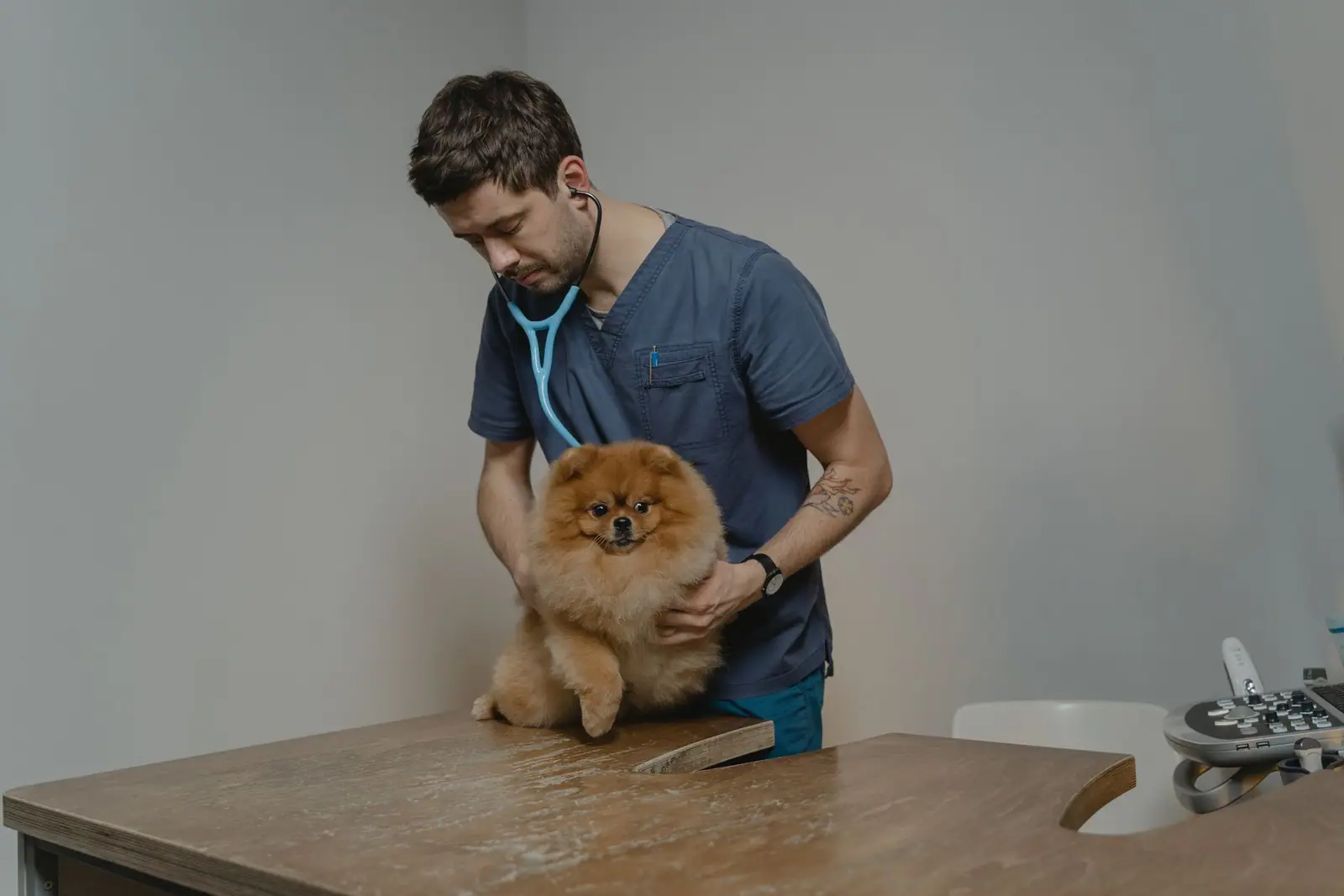
Hamilton Plaza in Dacula, Georgia lists a comprehensive exam from $68, a fecal test from $25 and a heartworm-and-tick-disease test from $55. Its prices are separate service lines, not a package every adult dog should receive. The clinic can explain what the care plan calls for and what is included in its estimate.
An exam and those two separately quoted tests would start at $148 before any other care or payment charge. That arithmetic does not justify choosing the tests or establish an annual medical bill. Vaccination, medication, follow-up and dental needs can change spending substantially.
The dog diagnostic-estimate guide explains why a symptom investigation can cost more than a routine allowance. Keep examinations, proposed diagnostics and treatment distinct when asking for a quote.
Paid walking can exceed food and routine supplies
Pyatt’s publishes a $35 half-hour dog-walking or household-pet visit in its New Jersey and Pennsylvania service area. Three visits weekly for 48 weeks cost $5,040. Five weekly visits for the same period cost $8,400. The calendar and booking count are assumptions; the provider’s visit rate is published.
Adding the five-visit example to the $2,420 worksheet produces $10,820 annually, or $901.67 a month. That does not make dog ownership universally that expensive. It shows the effect of buying frequent daily help that the original worksheet excluded.
Compare the walk duration, number of dogs, travel arrangements and what happens on holidays. A cheaper visit can have a different scope, and daycare is a different service. The dog-walker cost comparison keeps attendance frequency visible so a daily price does not disappear inside a monthly allowance.
Reserves and insurance pay for different things
An emergency reserve is savings held for possible costs. An insurance premium buys the policy’s coverage subject to its terms. Paying one does not establish that the other is unnecessary, and a reserve transfer is not the same as a veterinary expense already incurred.
For funding examples, building a $600 reserve over twelve months requires $50 per month; $1,200 requires $100. Neither figure is a medically justified minimum or a promise that an emergency will fit inside it. Available cash, coverage, deductible and exclusions affect the household’s funding needs.
Read the policy quote for deductible, reimbursement percentage, annual limits and what counts as a covered condition. A hypothetical $1,000 eligible bill with a $250 deductible and 80% reimbursement leaves $400 with the household: $250 deductible plus 20% of the remaining $750. That simplified example excludes other policy rules and is not a guarantee of claim payment.
The dog insurance guide addresses those terms. Keep wellness plans and insurance distinct; the names alone do not tell the buyer whether illness or emergency treatment is covered.
Agree on veterinary care and diet with the treating team, then replace the worksheet’s allowances with quotes. Keep urgent care separate from optional upgrades. A budget shortfall does not establish that a dog can safely wait for treatment.
Review the plan after a few months of receipts. Look for costs paid once, costs booked repeatedly and costs deferred rather than eliminated. Preserve the date on each quote so a $68 exam or a $35 visit remains identifiable as a local example, rather than drifting into an unsupported national average.
The dog dental-cleaning cost guide covers a procedure that is not included in the example routine allowance. Ask for the proposed work and estimate rather than treating every dental bill as a standard annual purchase.
The heartworm-prevention cost guide explains another recurring line. Replace the assumed monthly product allowance with the veterinary care plan and current quotes for the dog.
Questions people ask
What is a reasonable monthly adult-dog budget?
The article's hypothetical plan is $201.67 monthly, but it excludes several major costs. Replace its food, medical, insurance and service assumptions with the dog's care plan and local quotes.
Is ASPCA's $1,391 figure current?
The source labels it a 2021 update. It is historical context for budget categories, not a current quote for every household.
Why can paid walking change the total so much?
At the named $35 visit price, five visits weekly for 48 weeks cost $8,400. Frequency creates the annual cost; food spending alone does not represent the full budget.
Should an emergency reserve be counted as insurance?
No. A reserve is savings available to fund costs, while insurance has coverage terms and premiums. Show both separately and distinguish money saved from bills already paid.
Where these figures come from
- Pet Care Cost Table: 2021 Update ASPCA · aspca.org
- Exams, Grooming and Adult-Dog Boarding: Local Prices Hamilton Plaza Animal Hospital · hpahospital.com
- Dog Walking and Household-Pet Visit Prices Pyatt's Farm & Pet Care · pyattsfarmandpetcare.com
Figures last checked October 2026.
Calculator
Your pet's budget
Fill in what you spend, or expect to. Leave out anything that does not apply.
Set aside a separate fund for emergencies, which a routine budget does not cover.