On this page
A backyard chicken budget has continuing bills even after the coop is built. Feed, bedding, water access, repairs, veterinary care and someone to inspect the flock remain when egg production slows. The startup hardware bill and the annual care budget answer different questions and should be kept apart.
The calculations here use one published feed-consumption example and one manufacturer’s organic feed prices, checked in October 2026. They do not represent the cheapest feed or a national average. Bird size, age, season, waste and local prices can move the household total, so replace the consumption example with purchases and remaining stock once the flock is established.
Key figures
- 156 pounds Example: yearly feed for one 6-pound hen
- $1,156.87 Example: whole-bag yearly feed for four hens
- $2,224.75 Example: whole-bag yearly feed for eight hens
Feed quantity makes the largest recurring line concrete
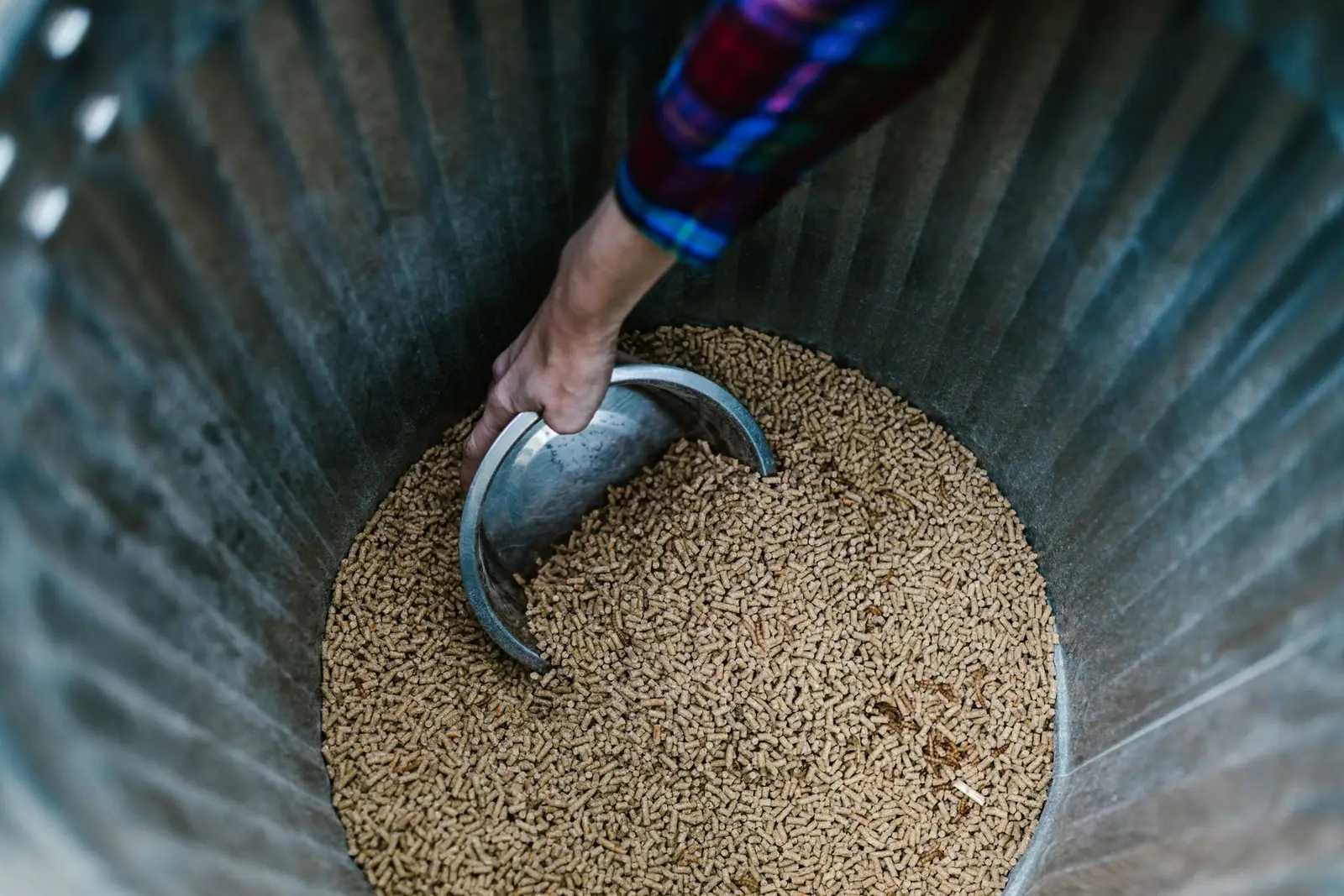
University of Minnesota Extension says a 6-pound hen eats roughly 3 pounds of feed a week. Applying that example for 52 weeks gives 156 pounds per hen. Four hens produce a 624-pound planning quantity, six 936 pounds and eight 1,248 pounds.
Scratch & Peck’s current direct-store variants for Organic Layer Pellets 16% list $44.99 for 25 pounds and $88.99 for 50 pounds. The corresponding unit prices are about $1.80 and $1.78 per pound. The manufacturer labels this feed for laying chickens and ducks from 20 weeks or when laying begins; it is not a universal feed for newly hatched chicks.
| Flock using the 6-pound-hen example | Annual feed quantity | Whole 50-pound bags to buy from empty stock | Bag purchase cost |
|---|---|---|---|
| 4 hens | 624 pounds | 13 | $1,156.87 |
| 6 hens | 936 pounds | 19 | $1,690.81 |
| 8 hens | 1,248 pounds | 25 | $2,224.75 |
Source note: Minnesota Extension supplies the weekly quantity for a 6-pound hen. Scratch & Peck supplies the current $88.99 bag price. Annual quantities and rounded bag purchases are arithmetic examples, not feeding instructions or a quoted household budget.
- 4 hens$1,156.87
- 6 hens$1,690.81
- 8 hens$2,224.75
Source note: Minnesota Extension supplies the weekly quantity for a 6-pound hen. Scratch & Peck supplies the current $88.99 bag price. Annual quantities and rounded bag purchases are arithmetic examples, not feeding instructions or a quoted household budget.
Feed consumption can rise in winter and change with breed, body size and other conditions. Kitchen scraps and scratch grain are not replacements for a balanced feed. The chicken feed guide explains the care question; the money calculation should not be used to restrict feed to a cost target.
Consumption cost and checkout spending differ
For four hens in the example, 624 pounds at $88.99 per 50 pounds has a consumption value of $1,110.60. Starting with no feed on hand requires buying thirteen bags, or 650 pounds, for $1,156.87. The extra 26 pounds remains inventory rather than feed already consumed.
The distinction matters when comparing bag sizes. Twenty-five 25-pound bags supply 625 pounds for $1,124.75, leaving only one pound. That first year’s cash outlay is $32.12 below the thirteen large bags, even though the large bag’s per-pound price is lower. Different ending stock explains the apparent contradiction.
Two small bags cost $89.98 for 50 pounds, compared with one large bag at $88.99, a $0.99 unit-purchase difference. Delivery charges, storage and feed loss can outweigh that saving. The manufacturer states a six-month shelf life for properly stored layer pellets, so an annual calculation does not justify ordering a whole year’s feed at once.
Keep receipts and note how much remains at the start and end of a month. A damp or pest-damaged bag is a loss, not normal consumption. The poultry feed storage budget covers the containers and storage arrangement that belong alongside the bag-price comparison.
Housing and nests are startup purchases
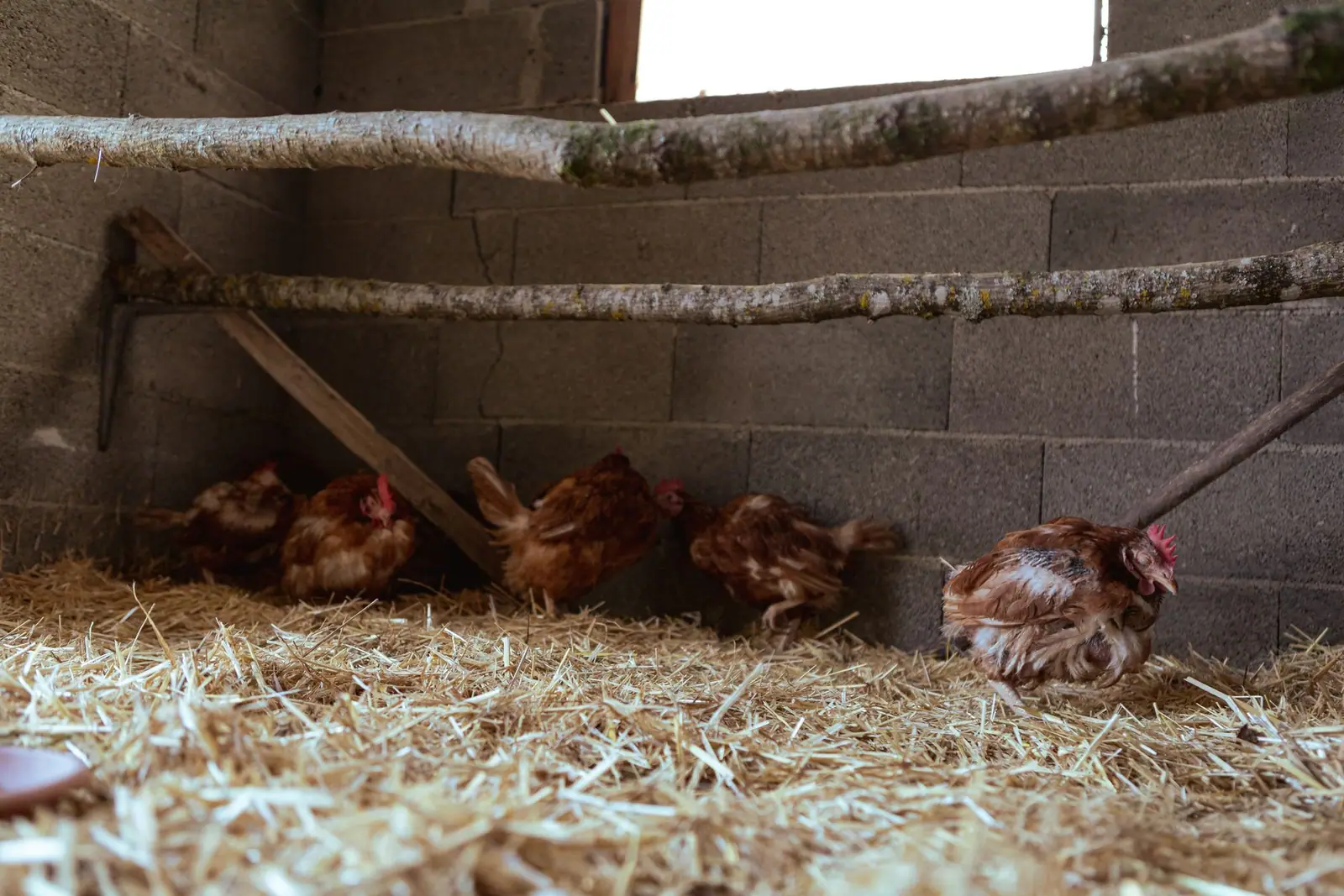
Minnesota recommends one nest box per four to five layers, with weather and predator protection in the coop. For an example of equipment pricing, RentACoop lists a three-compartment metal roll-out nesting suite at $159.99, describing it for approximately 10–12 hens. A four-hen flock does not automatically need that entire suite simply because its price is easy to find.
Coop cost depends on its size, construction, delivery, site and local rules. Rather than inventing a national range, obtain a quote for the housing arrangement the flock can use. A hypothetical $800 coop plus $300 run and $150 site work totals $1,250 before accessories or tax. Those are worksheet allowances, not a published coop package.
If nest space is already included in a coop quote, adding a separate $159.99 suite would count another purchase, not reveal a previously omitted mandatory fee. The nest box budget compares capacity, roll-out hardware and existing nests. Price the equipment once and keep its cleaning or replacement supplies on the continuing budget.
Bedding and care allowances broaden the annual subtotal
Start with the four-hen bag purchases of $1,156.87, then assume $120 bedding, $250 set aside for veterinary work and $200 paid care during absences. The worksheet totals $1,726.87, about $143.91 per month when divided over twelve months. Only feed quantity and bag price are anchored to the published example; the other amounts are hypothetical household allowances.
That subtotal excludes startup housing, grit or calcium purchases, water charges, electricity, repairs and the cost of acquiring birds. It is deliberately a named subtotal rather than a claim to include every possible expense. Add the omitted items when they are priced rather than treating the number as a spending ceiling.
A veterinary reserve is money held, not a bill already paid. If no appointment occurs during the year, it remains available for later care. A future illness may cost more than the allowance, so the $250 example should never be described as enough for any case.
Likewise, unpaid household chores do not become a cash expense merely by assigning an hourly value. For a time worksheet, assume 15 minutes a day for feeding, water, observation and cleanup. That is 91.25 hours over 365 days, before major cleaning or repairs. A paid sitter’s rate and visit scope need quoting separately.
Eggs do not cancel care costs automatically
Suppose a hypothetical four-hen flock yields 900 usable eggs in a year. The $1,726.87 subtotal divided by 75 dozen is about $23.02 per dozen. If the same hypothetical annual care spending produces 1,200 usable eggs, or 100 dozen, the subtotal is $17.27 per dozen. Neither output is a production forecast.
The example uses a premium organic feed and hypothetical care allowances, so it does not establish the economic result for all backyard flocks. Its purpose is to show that egg yield changes the denominator while feed and care continue. Broken, dirty or unused eggs should not be counted as household food savings.
If comparable store eggs hypothetically cost $6 per dozen, 75 dozen replace $450 in purchases. That is less than the named care subtotal, before startup housing. A flock can still be valued for enjoyment or the preferred eggs, but the budget should not call that difference a cash profit. The brown versus white egg guide explains why shell color should not be used to invent a nutritional premium in that comparison.
Health protection remains part of daily spending and work
Minnesota emphasizes continuous access to fresh clean water and a balanced laying diet. CDC advises handwashing after contact with poultry or their environment, keeping supplies outside the home and supervising hygiene. An automatic feeder or door does not inspect sick birds or make those duties unnecessary.
Do not reduce care to force an egg-cost target. Plan feed, water, shelter and veterinary access for the flock, including older birds and periods without laying, and follow local poultry rules before purchasing animals.
Keep a monthly record with feed bought, stock left, bedding, paid visits and repairs. This lets the next year’s plan use household evidence instead of repeatedly substituting a national average. As the flock grows or ages, update capacity and care arrangements before counting the expected eggs.
Questions people ask
How much feed should a four-hen budget include?
Using Minnesota's rough example for 6-pound hens gives 624 pounds over 52 weeks. It is a planning example; bird size, season, diet and waste can change purchases.
Is the larger feed bag always cheaper for the year?
Its unit price may be lower while whole-bag checkout spending is higher because more stock remains. Here thirteen 50-pound bags cost $1,156.87, while twenty-five 25-pound bags cost $1,124.75 and leave less inventory.
Should a coop price be counted every year?
A startup purchase is separate from yearly feed and care. Include repairs or replacements when expected, but do not automatically repeat the original coop invoice as an annual cash expense.
Will backyard eggs pay for the flock?
That depends on usable output, comparable egg prices and all care costs. The examples show the calculation without assuming a guaranteed egg yield or a profit.
Where these figures come from
- Raising Chickens for Eggs: Feed and Housing University of Minnesota Extension · extension.umn.edu
- Organic Layer Pellets 16%: Variants and Shelf Life Scratch & Peck Feeds · scratchandpeck.com
- Three-Compartment Roll-Out Nesting Box Suite RentACoop · rentacoop.com
- Backyard Poultry: Healthy Pets, Healthy People CDC · cdc.gov
Figures last checked October 2026.