On this page
A new couch with shredded arms can make declawing sound tempting. It is worth understanding what the procedure really is, and how well the alternatives work.
Why cats scratch
Scratching is a normal behavior. Cats scratch to leave scent and visual marks, stretch their bodies and remove the worn outer layers of their claws. You cannot stop it, but you can choose where it happens.
What declawing actually is
The Feline Veterinary Medical Association, formerly the American Association of Feline Practitioners, strongly opposes declawing as an elective procedure. Its position statement explains that many owners do not realize declawing is a surgical amputation of the last bone of each toe, and lists risks that include acute pain, infection, nerve damage, lameness, behavior problems and chronic pain.
The organization ended elective declawing in its designated Cat Friendly Practices. In 2019 New York became the first state to ban declawing except for medical reasons, and several other states have since passed their own restrictions.
Redirecting scratching
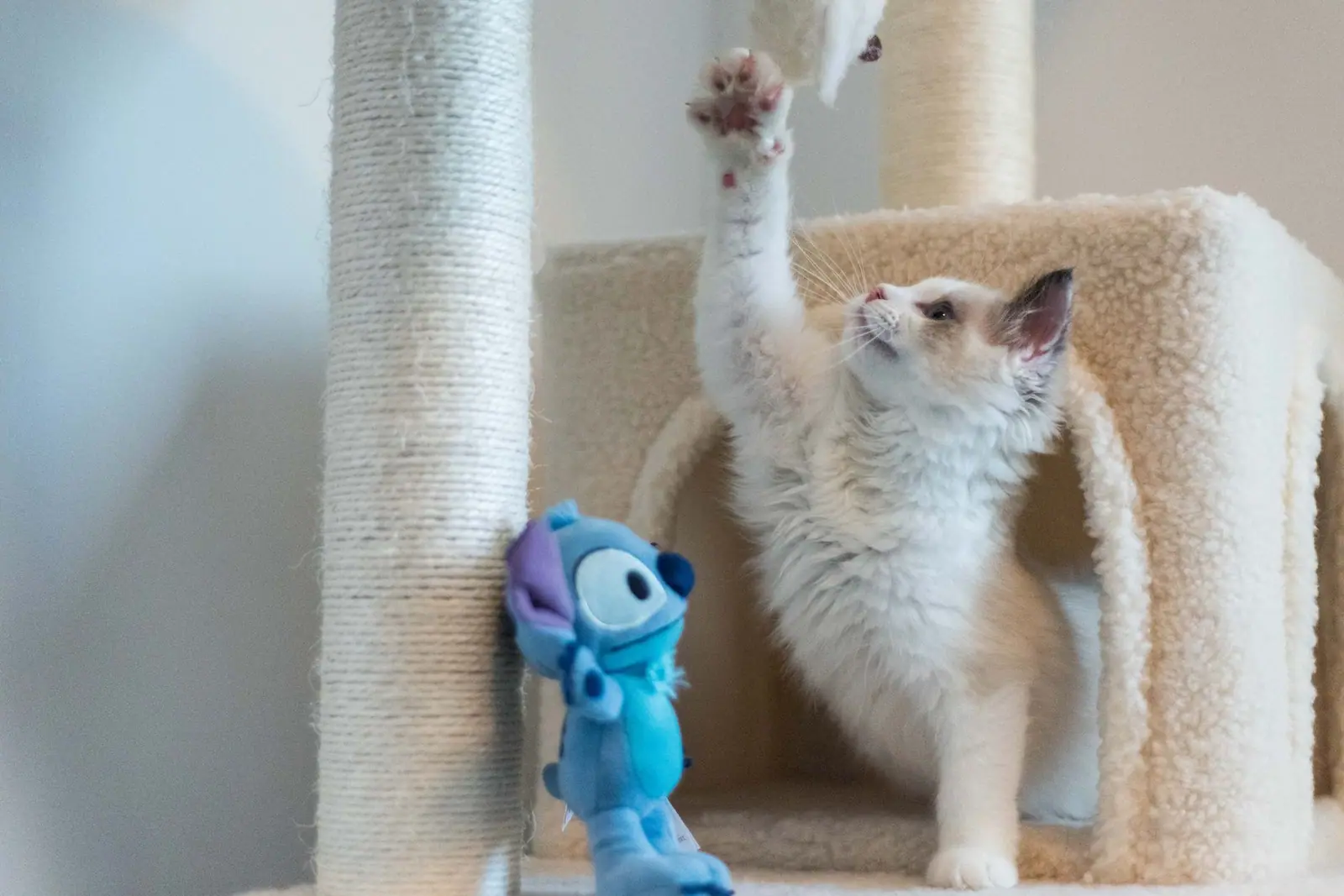
- Offer the right post. Tall and sturdy enough for a full stretch, and heavy enough not to wobble.
- Try textures. Sisal rope and fabric are popular; some cats prefer horizontal cardboard.
- Put it where the damage is. Place a post right in front of the scratched furniture.
- Make the furniture less appealing with double-sided tape or a throw for a few weeks.
- Reward use with treats or play at the post.
- Trim nails regularly to reduce damage.

Cats often scratch near where they sleep and at room entrances. A post in each of those spots does more than one expensive tower in a corner.
The indoor enrichment guide puts scratching resources beside other activities. The food puzzle comparison prices a separate supervised foraging task.
Questions people ask
Is declawing a cat cruel?
The feline veterinary association strongly opposes elective declawing, which amputates the last bone of each toe and carries risks including chronic pain.
Is declawing illegal?
New York banned it in 2019 except for medical reasons, and other states and some cities have followed. Check the current rules where you live.
How do I stop my cat scratching the couch?
Place a sturdy scratching post right in front of it, make the couch less appealing for a while, and reward use of the post.
How often should I trim my cat's nails?
Every couple of weeks for many indoor cats, or whenever the tips become sharp.
Where these figures come from
- 2017 Declawing Position Statement Feline Veterinary Medical Association · catvets.com
- Senate Bill S5532, prohibiting the declawing of cats (2019) New York State Senate · nysenate.gov
Figures last checked September 2026.